Skip to content

Cutting-edge science explained with clarity and rigor

We synthesize global scientific breakthroughs into 3-minute reads, directly translated and faithful to primary sources.

Showing 145–168 of 195
  • Life Sciences

    New Genetic Tool Helps Monitor Stress in Salmon

    A PLOS ONE paper describes the OSTP chip, a panel of 28 qPCR assays on the OpenArray platform that reads how salmonid fish cope with salt stress. Tested on eight species, it detected the molecular signature of a 24-hour saltwater challenge in Chinook salmon.

    PLOS ONE2 min read
  • Computing

    Ai2 Updates Its AI Hardware Scheduler to Share GPUs Fairly

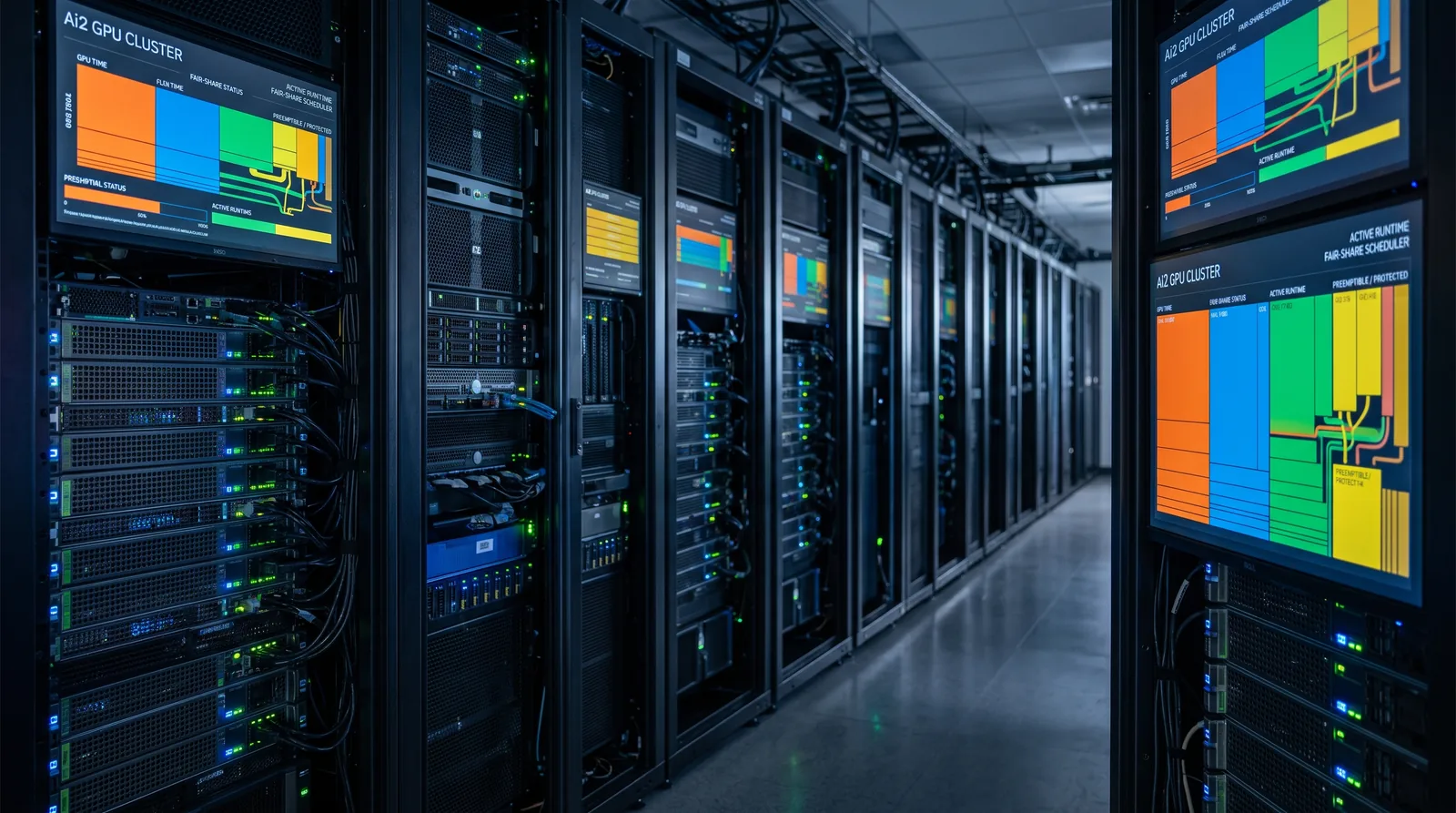
    Ai2's infrastructure team replaced a priority-based GPU scheduler with time budgets, hierarchical fair-share allocation and a minimum-runtime contract. They report that the change cut repairs needing a human by 74% and moved arguments about GPU share into a budgeting process.

    Hugging Face Blog2 min read

  • Space & Astronomy

    NASA Tests New Spacecraft Heat Shields Using Cargo Ship Trash

    NASA's KREPE-3 experiment sent 12 small capsules out of the International Space Station inside the departing Cygnus XL cargo ship, to test heat shield materials as the vehicle burns up in the atmosphere. The capsules were designed by University of Kentucky students and carry sensors for temperature, pressure, motion, magnetic field and light.

    NASA2 min read

  • Health

    Early Trial Tests New Universal Influenza Vaccine Strategy

    In a phase 1 trial with 45 healthy adults, the whole-virus flu vaccine BPL-1357 caused mostly mild side effects and raised antibodies against several flu subtypes when injected into muscle. The trial was designed to test safety first, so it cannot say whether the vaccine prevents influenza.

    Nature Communications3 min read

  • Health

    How Feeling Ready for a Job Affects College Students' Mental Health

    A panel survey followed 2552 Chinese university students from their first to their third year and asked how employable they believed themselves to be and how distressed they felt. Higher perceived employability went with lower distress, and almost all of that association came from two groups.

    Scientific Reports3 min read

  • Computing

    Cloudflare Acquires Deno and Ends Future Runtime Development

    Cloudflare is acquiring Deno and will keep the runtime alive for one more year of bug fixes and security updates before ending its development. Ryan Dahl, who created both Node.js and Deno, agrees with the decision and explains it in terms worth reading: the project was captured by the need to behave exactly like the thing it was meant to replace.

    Simon Willison3 min read

  • Environment

    Satellite Data Reveal Asymmetric Changes in High-Latitude Ocean Blooms

    Satellite records from 2007 to 2022 show that chlorophyll blooms in the high-latitude ocean are lasting longer, and that the fading phase is stretching more than the growth phase. North of 50°N, the ratio between the two is falling by about 5.3% per decade.

    Nature Communications3 min read

  • Engineering

    Detecting Steel Damage by Turning Vibrations into Pictures

    Damage in a steel structure changes how it vibrates, and often only slightly, which is why detecting it from vibration data is hard and gets harder with measurement noise. This study converts the vibration signal into an image and hands it to a convolutional network, reporting 94.5 percent accuracy on benchmark structures under noise-free conditions.

    Scientific Reports3 min read

  • Physics

    Error Semitransparent Universal Control of a Bosonic Logical Qubit

    A Nature Communications paper introduces a way to run universal logic gates on bosonic logical qubits that are partly protected from photon loss. The authors report a five-fold reduction in infidelity when conditioned on a photon loss event.

    Nature Communications1 min read

  • Space & Astronomy

    NASA Builds New Test Telescope for Space Observatory Project

    NASA has chosen L3Harris Technologies to build a new all-glass telescope for LISA, a space observatory meant to catch gravitational waves. The Engineering Test Unit is the final rehearsal before flight hardware, and it has to hold its shape through changes in distance narrower than a helium atom.

    NASA3 min read

  • Health

    Interpretable Machine Learning Can Help Tell Benign and Malignant Ovarian Tumors Apart

    Ovarian cancer is usually found late, which is why laboratory data has been pushed at machine learning for years, and the resulting models are usually opaque. This study takes a single-centre cohort of 349 patients and optimises two things at once: the classifier and the method that explains each of its decisions.

    Scientific Reports3 min read

  • Life Sciences

    How the Brain Simplifies Goals to Learn Faster

    A Nature Communications study proposes that people first learn abstract goals with working memory, then compress them into a simple reward rule that long-term memory applies automatically. Six behavioral experiments support the idea, though its algorithmic details remain unsettled.

    Nature Communications1 min read

  • Engineering

    A New Power Converter Design for Renewable Energy

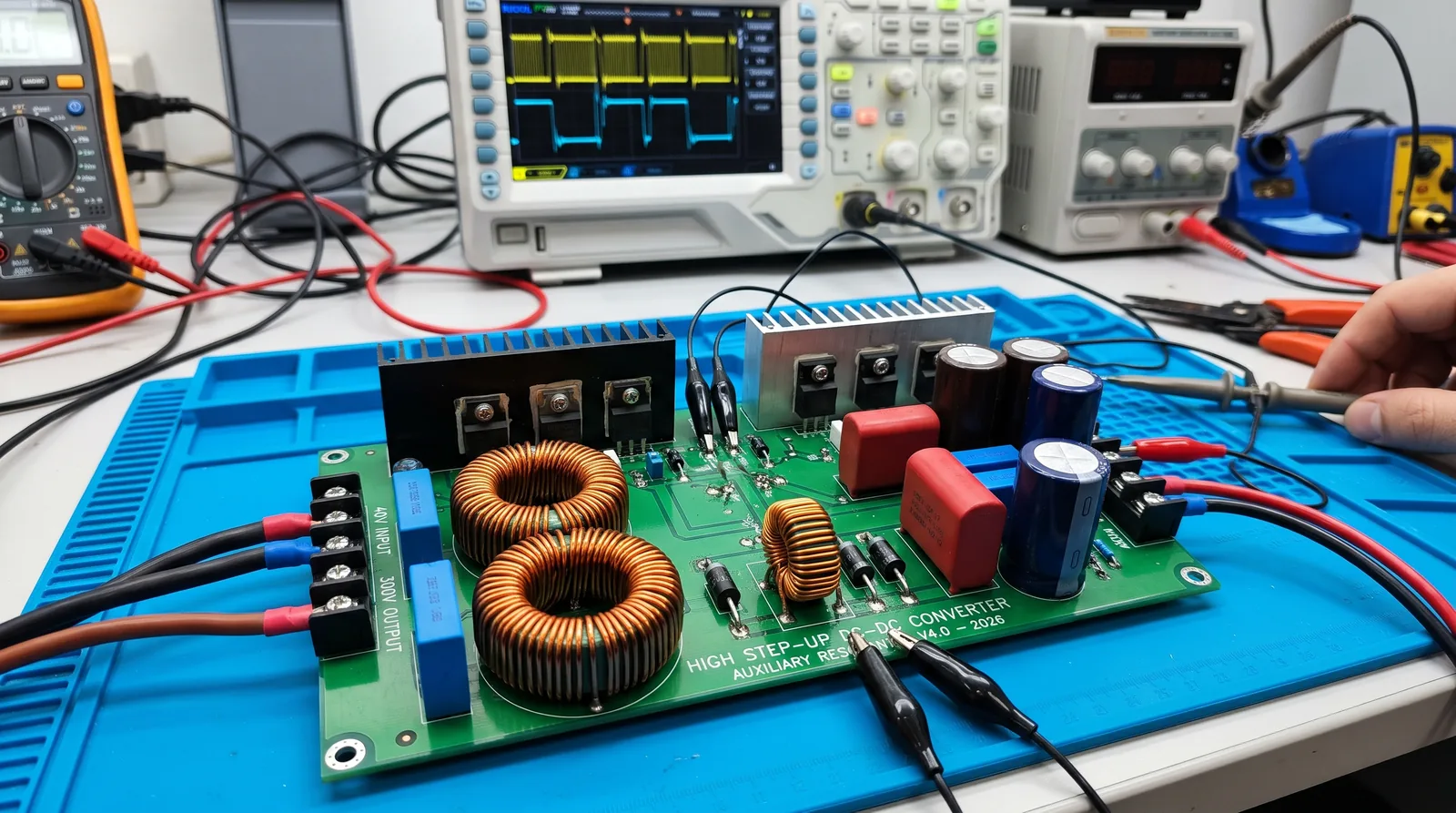
    Solar panels and batteries produce low voltages, and raising them to something a grid-tied inverter can use is done by a converter that switches on and off thousands of times a second. Each of those transitions wastes energy, and this design claims to eliminate the waste on every switch and diode using one auxiliary circuit.

    Scientific Reports3 min read

  • Computing

    A New Rule to Save Energy in Mobile Sensor Networks

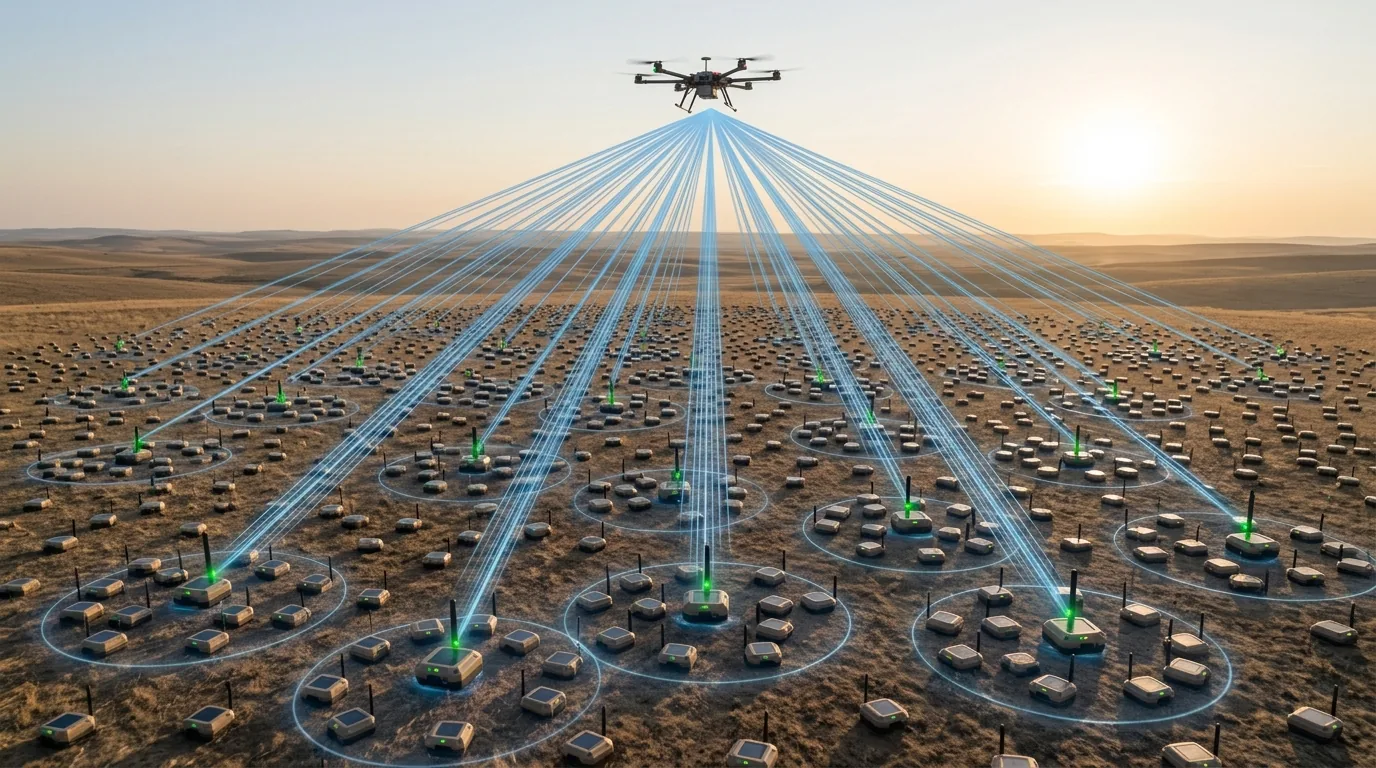
    Researchers propose a one-line rule for choosing which sensor node collects and forwards data when the receiver is moving, scoring each candidate by its remaining energy minus the cost of the transmission it would have to pay. The rule outlives three classic protocols in simulation, and the paper is unusually explicit about the conditions where it loses.

    Scientific Reports4 min read

  • AI & Automation

    Google Research Uses AI to Help Public Health Experts Track Disease and Health Risks

    Google Research reports five partner case studies in which location embeddings from its Population Dynamics Foundation Model (PDFM) matched or improved on conventional inputs for health forecasting. The results are shown by Google's own team and partners, and some depend on how far ahead the forecast looks.

    Google Research2 min read

  • Mathematics

    Researchers Race AI to Solve a Famous Math Problem

    A professor at MIT and two graduate students spent months failing to prove a conjecture about how hard it is to satisfy conflicting constraints, then succeeded, then published in three days because rumours said an AI company was about to announce something close. What happened next says more about mathematics in 2026 than either result does.

    Quanta Magazine4 min read

  • AI & Automation

    Anthropic Releases Claude Haiku 5.5 and Adds API Credits for Subscribers

    Anthropic's new Claude Haiku 5.5 costs $0.10 per million input tokens and $0.50 per million output tokens up to 100,000 tokens, the same as OpenAI's GPT-6 Luna. Simon Willison's hands-on tests show that the headline price hides a tokenizer change and a steep jump beyond that length.

    Simon Willison2 min read

  • Engineering

    A New Wearable Device Framework for Personalized Physical Education

    A university built a full chain from wearable sensors to teaching decisions for physical education classes, with individual baseline calibration and explicit objectives for training effect, injury risk and plan flexibility. The reported results include an injury incidence of 1.7 percent against 13.3 percent in the control group, in a study whose own authors note that teachers knew the allocation.

    Scientific Reports3 min read

  • AI & Automation

    HSCM-Lane: Using Shifted-Window Context Modeling for Pixel-Wise Lane Segmentation

    Lane keeping systems need the painted lines, and the hard cases are the ones where the paint is thin, low contrast, hidden by a car or simply missing for a stretch. This paper adds a context module at three levels of the network and reports modest, carefully quantified gains, including on a dataset it was not trained on.

    PLOS ONE3 min read

  • Health

    Diabetes Drug May Help Limit Heart Disease Risks After Brain Injury in Mice

    Mice given a head injury developed more arterial plaque and higher blood pressure than mice that were not injured, and a diabetes drug prevented both. The effect appeared without any change in cholesterol, glucose or insulin, which points at a mechanism other than metabolism.

    Scientific Reports3 min read

  • Mathematics

    OpenAI Releases AI Proofs for Hundreds of Major Math Problems

    Computer scientist Scott Aaronson describes OpenAI's release of 372 machine-written results, among them a claimed proof of the Unique Games Conjecture. He stresses that some come with Lean certificates but that humans have barely begun to read them.

    Scott Aaronson (UT Austin)2 min read

  • AI & Automation

    Microsoft Introduces Quine, an Experimental AI System for Biology Research

    Microsoft Research introduced Quine, an experimental system that pairs a model of biology with tools, literature and scientists. In work with the Broad Institute, it ranked compounds meant to shift pancreatic tumor cells between states, and the top picks were checked in the lab.

    Microsoft Research2 min read