Skip to content

Cutting-edge science explained with clarity and rigor

We synthesize global scientific breakthroughs into 3-minute reads, directly translated and faithful to primary sources.

Showing 121–144 of 195
  • AI & Automation

    New IBM Granite Switch 4.1 Models Combine Multiple AI Capabilities on One GPU

    The Granite Switch 4.1 project introduces a unified AI architecture that combines speech recognition and decision-making capabilities into models of 8 and 30 billion parameters. This modular approach allows developers to mix and match specialized components while keeping memory usage comparable to running just the base model.

    Hugging Face Blog2 min read
  • Health

    How Salton Sea Dust Alters Lung and Gut Microbes in Mice

    Researchers collected dust around California's Salton Sea, aerosolized it and exposed mice to it for 7 days. The mice developed lung inflammation and their lung and gut microbiomes changed in opposite directions, most clearly with dust from the Wister site.

    Scientific Reports2 min read

  • Engineering

    New Steel Design Reaches Extreme Stretchiness

    Strength and ductility usually trade against each other in metals, and the ceiling for how far a strong metal can stretch uniformly has sat around 60 to 70 percent. A team at Kyoto University reached nearly 140 percent by arranging for two hardening mechanisms to take turns instead of competing.

    Kyoto University3 min read

  • Health

    Using Machine Learning to Improve Drug Discovery Screening

    A new computational study combines molecular docking with machine learning to rank drug candidates on several properties at once, instead of just one. It is a promising screening method, but it has only been tested on computers, so it says nothing yet about real-world drug success.

    Scientific Reports3 min read

  • AI & Automation

    Call for Stories on Human and AI Teamwork in Mathematics

    Two mathematicians, Deanna Needell and Hayden Schaeffer, are collecting stories from researchers who have worked with AI on recent math results. The call is for personal accounts, not data. So it can map how people are using AI in mathematics, but it can’t yet say how well that collaboration works.

    Terence Tao (UCLA)3 min read

  • AI & Automation

    Why Learning to Learn Matters More Than Ever in the Age of AI

    At a lifelong learning festival hosted by the National University of Singapore (NUS), speakers argued that as AI takes over routine tasks, human judgement, curiosity and the habit of continuous learning matter more. The ideas are reasonable, but they come from an event organized by a university, so they are opinions and not evidence about how work will actually change.

    National University of Singapore3 min read

  • Physics

    Scientists Study Rare Quark Decays to Test Physics Theories

    One kind of quark turning into another can only happen through the weak interaction, and the rarest of those transitions are the best place to look for particles nobody has found. Two collaborations at the Large Hadron Collider reported new measurements of one such transition, and both found small differences from prediction that they are careful not to call a discovery.

    CERN4 min read

  • AI & Automation

    How Artificial Intelligence is Changing Video Game Preservation and Software Security

    An independent game developer describes a wave of AI-assisted decompilation that is turning compiled games back into source code, which is reviving games that no longer run and enabling odd mashups between them. The same capability means any compiled program can be read by anyone, and the two consequences cannot be separated.

    Simon Willison3 min read

  • Environment

    Tracking Ecosystem Vulnerability and Balance in China's Yangtze River Economic Belt

    The Yangtze River Economic Belt carries a large share of China's economy and its forests, cropland and water are managed as a single system. This study scores the ecological vulnerability of that system from 2000 to 2023 and reports it falling, with the pieces of the system becoming better coordinated.

    PLOS ONE3 min read

  • Health

    New Insights into Heart Inflammation Caused by Cancer Immunotherapy

    Checkpoint inhibitors release the immune system against a tumour, and in rare cases it attacks the heart instead, with a high chance of death. This study profiles the immune cells involved, identifies a specific T cell population linked to the damage, blocks the signal that recruits them in mice, and proposes a blood test to recognise the condition.

    Nature Communications3 min read

  • AI & Automation

    New Computer Model Helps Identify Lemon Leaf Diseases From Photos

    Diagnosing leaf disease from a photograph is a crowded research area in which most models are measured only on the dataset they were trained on. This paper publishes a new 14-class citrus dataset, proposes a multi-branch network, and then does the thing that matters: tests it on three independent datasets without retraining.

    Scientific Reports3 min read

  • AI & Automation

    Google DeepMind On-Device AI Scam Detection

    Google adapted its small Gemma model to recognise the specific scams used in one country and built it to run on the phone rather than on a server. The design means conversations stay on the device, and the announcement contains no measurement of how well it detects anything.

    Google DeepMind3 min read

  • Environment

    Wildfires and Air Quality Risks in Amazonas

    Researchers at a Fiocruz climate and health observatory published a technical note on air quality in the state of Amazonas during the burning season, combining measured fine particulate concentrations, the distribution of fire hotspots and forecasts for different locations. Its distinguishing feature is that it maps those readings against Indigenous villages.

    Agência Fiocruz3 min read

  • AI & Automation

    LFM2.5-24B-A2B: A Fast New Artificial Intelligence Model for Personal Devices

    Liquid AI released LFM2.5-24B-A2B, a 24-billion-parameter reasoning model that activates only 2 billion parameters per token and is meant to run agents on a user's own hardware. The company reports that it matches or beats larger models on tool-use benchmarks but trails them on knowledge and coding.

    Hugging Face Blog2 min read

  • Physics

    New Method Aims to Reduce Errors in Quantum Simulators

    Analogue quantum simulators are built to let a quantum system imitate another one, and noise is what limits how far they can be trusted. A theory paper proposes cancelling that noise exactly, using a small number of extra qubits and arithmetic done afterwards, without touching the system while it evolves.

    Nature Communications3 min read

  • Life Sciences

    Scientific Expedition Discovers New Animal Species in the Amazon

    A FAPESP-funded expedition took sixteen researchers to the Aracá range in northern Amazonas for 19 days to survey highland ecosystems that had barely been studied. They came back with counts of lizards, snakes and amphibians in which a large share are probably new to science, which is a statement about the sampling as much as about the animals.

    Revista Pesquisa FAPESP3 min read

  • Life Sciences

    Sparse Neuronal C4 Elevation Triggers Broad Cortical Remodeling

    A PLOS Computational Biology study raised the immune protein C4 in about 2% of mouse prefrontal cortex neurons and found wide changes in gene activity in the surrounding tissue. Neighboring cells showed signs of altered lipid handling, hinting that C4 acts beyond the neurons that make it.

    PLOS Computational Biology2 min read

  • AI & Automation

    New Computer Model Improves Tracking of Physical Activity From Wrist Sensors

    Large health studies infer how much people move from wrist accelerometers, and the quality of that inference sets the quality of every conclusion drawn from it. This study trained a self-supervised model on labelled data from 151 participants and compared it against the random forest approach the field has been using.

    Scientific Reports3 min read

  • AI & Automation

    How a Simple Attention Trick Sparked the Modern AI Boom

    In 2014 an intern in a Montreal laboratory was asked to make a neural network translate English into French, and invented an operation that let the network look anywhere in the sentence for the information it needed. Everything since, including the chatbots, rests on that operation and on what a team at Google did with it three years later.

    Quanta Magazine4 min read

  • Computing

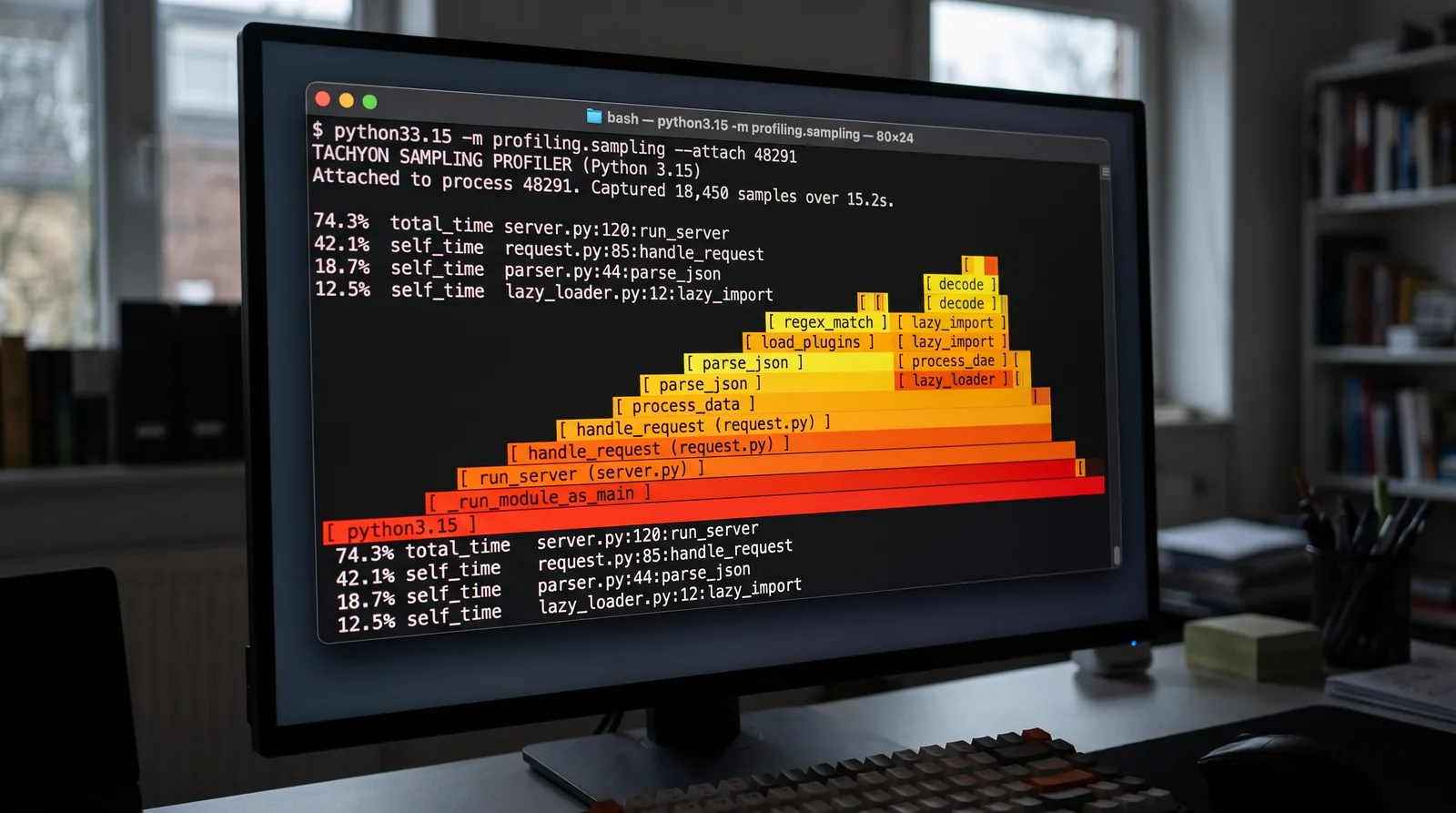
    Python 3.15 Arrives with Lazy Imports and Tachyon Profiling

    Python 3.15 arrived with explicit lazy imports, a new sampling profiler in the standard library and a small syntax addition for comprehensions. It is not faster than the previous version in general, and the most consequential change for developers may be that Python 3.10 is now out of support.

    Simon Willison4 min read

  • AI & Automation

    New AI Toothbrush System Tracks Brushing Physics

    Smart toothbrushes track the handle, which tells you where someone is moving the brush and not what is happening where it touches. This system embeds a sensor in the bristles themselves, and reports recognising motion and contact patterns and locating the brush across 21 subregions of the mouth.

    Nature Communications3 min read

  • Life Sciences

    Nobel Prize Recognizes Light-Based Brain Control Tool Called Optogenetics

    The Nobel Prize in Physiology or Medicine went to Peter Hegemann, Georg Nagel and Karl Deisseroth for optogenetics, a method that uses light to turn individual brain cells on and off. Caltech scientists describe how the tool grew from an algal protein into a way to test what brain cells cause.

    Caltech2 min read

  • Computing

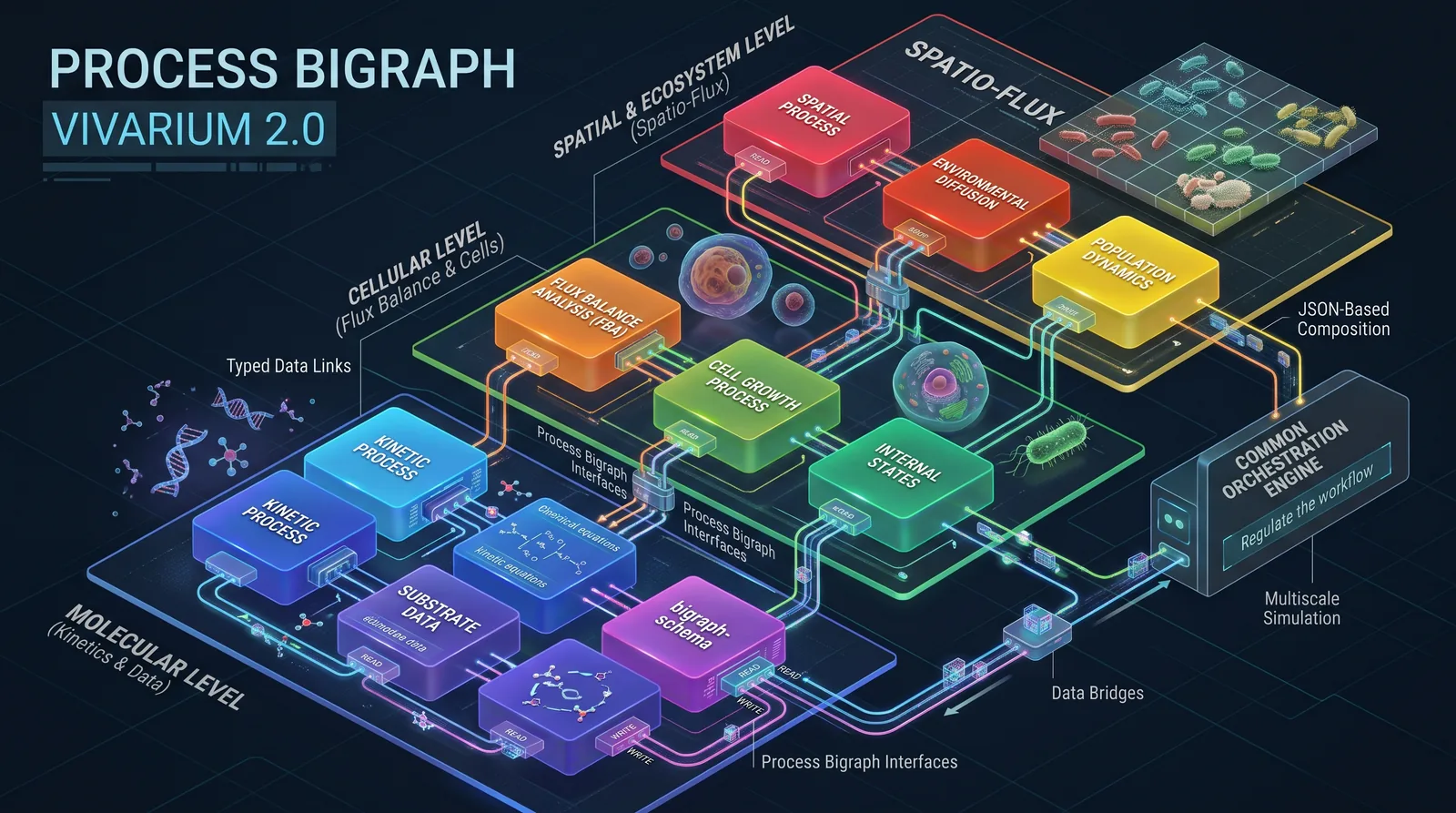
    Process Bigraph: A New Framework for Connecting Biological Computer Models

    A PLOS Computational Biology paper by Eran Agmon and Ryan Spangler presents Process Bigraph, a framework for combining separate biological models into one simulation. Its open-source implementation, Vivarium 2.0, is shown with microbial ecosystem simulations.

    PLOS Computational Biology2 min read

  • Health

    New Questionnaire Measures Postpartum Sexual and Reproductive Health

    Researchers built a questionnaire to measure sexual and reproductive health after childbirth, starting from interviews with mothers, husbands and midwives rather than from an existing instrument. When the statistics sorted the items into groups, one of the four that emerged was spouse abuse.

    Scientific Reports3 min read