Navigating a one-year integrated cancer care pathway
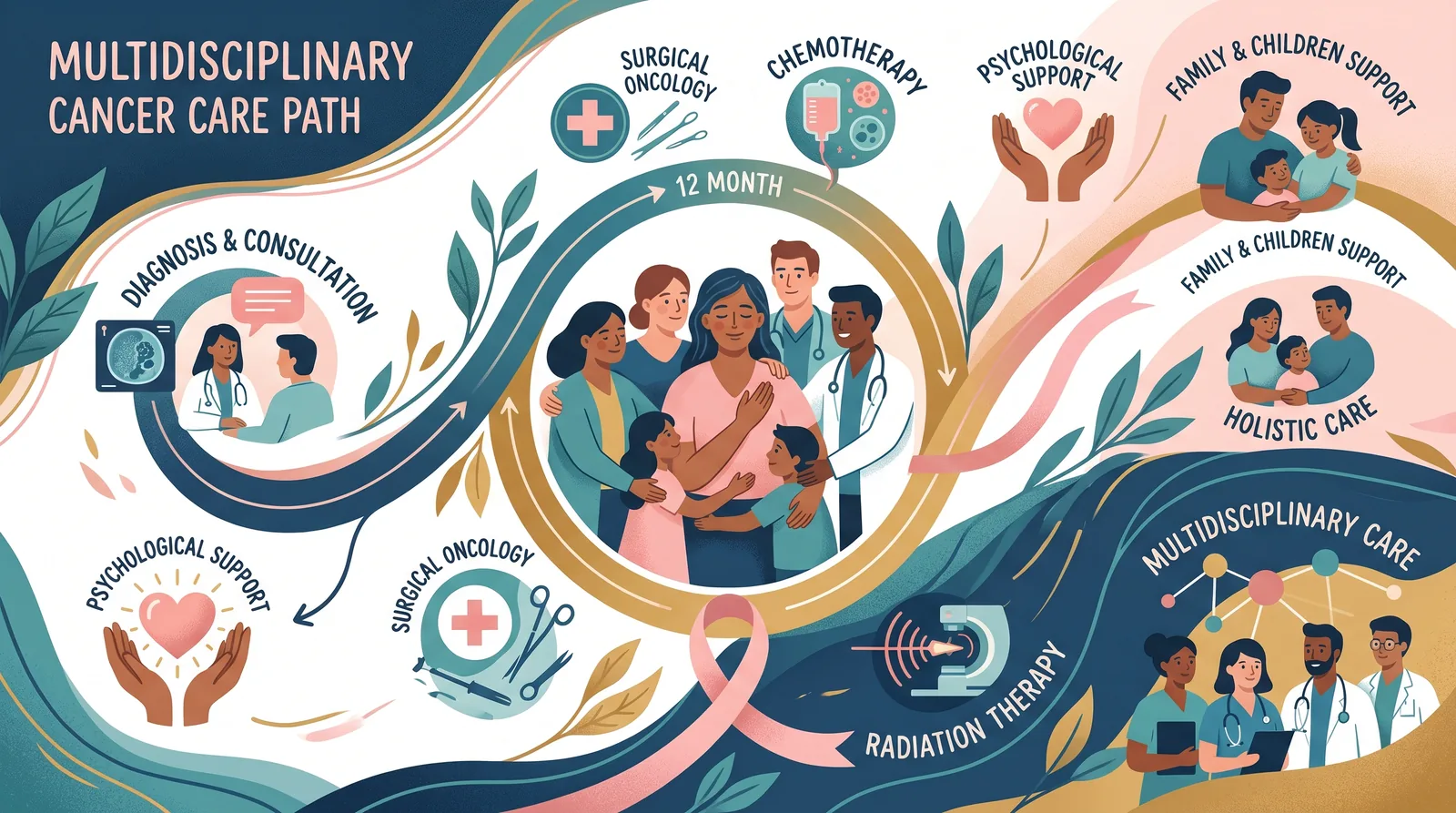
A 40-year-old patient diagnosed with Stage III breast cancer navigated a multidisciplinary treatment regimen including chemotherapy, radiation, and psychological support over a one-year period. Examining this single case illustrates how specialized cancer centers coordinate complex medical and supportive interventions following an initial physical examination.
Reviewed by Matheus Grangeiro
- Sample size
- 1
Key numbers
2023year
Year of the breast exam and diagnosis
40years
Age of the patient at diagnosis
2children
Number of children the patient has
2weeks
Time elapsed between finding the lump and meeting the specialist
IIIstage
Stage of the breast cancer diagnosis
Evidence level: Single-patient narrative; not a clinical trial or comparative effectiveness study
Why it matters: Navigating a complex cancer diagnosis and a multi-modality treatment regimen can be extremely overwhelming for patients and their families. A patient-centred, multidisciplinary approach that combines oncological treatment with practical and psychological support may help patients manage the immediate and long-term consequences of cancer care.
How a multidisciplinary breast cancer treatment unfolds In 2023, Hilary Axtmayer, then a 40-year-old mother of two from Madison, Connecticut, was diagnosed with Stage III estrogen- and progesterone-positive breast cancer after her gynaecologist identified a lump during a routine breast examination. Less than two weeks later, she consulted Rachel Greenup, MD, MPH, chief of breast surgical oncology at Smilow Cancer Hospital and professor of surgery (oncology) at Yale School of Medicine.
During that consultation, Greenup explained the treatment options and reassured Axtmayer that her cancer was treatable and curable. Axtmayer described the transition from ordinary life to cancer care as overwhelming, and she received the majority of her treatment at Smilow Cancer Hospital and Yale Cancer Center.
Over the following year, physicians, nurses and other staff supported her through multiple surgeries, chemotherapy and radiation therapy. The case illustrates one patient’s experience of coordinated, multidisciplinary cancer care; it does not evaluate a new intervention or establish outcomes for a population.
What the clinical narrative documents The report documents the care pathway of a single patient receiving treatment at specialized cancer centres. It is a qualitative patient narrative rather than a controlled study, so it cannot estimate treatment effect, compare interventions or generalize outcomes to other patients.
Axtmayer underwent surgery to remove 19 lymph nodes after a biopsy found that cancer had spread to some lymph nodes in her right arm. Because her tumour was hormone-sensitive, she also had her ovaries and fallopian tubes removed to reduce estrogen production.
She continues to take estrogen suppressors and a targeted therapy to reduce the chance of recurrence and will remain on this treatment for years. These details describe her individual course of care; they are not presented by Yale as a new treatment protocol or as evidence that all patients with Stage III breast cancer should receive the same sequence of therapies.
Integrating psychological and practical support Alongside surgery, chemotherapy and radiation, Axtmayer’s care team connected her with a social worker and a therapist. The social worker helped her talk with her children about the diagnosis, while the therapist provided additional support during treatment.
The article also describes broader support services at Yale Cancer Center, including social workers who connect patients with community resources and support groups, and dietitians who help patients manage treatment-related weight and nutrition concerns. Axtmayer also received massage during chemotherapy and said that this support became important to her.
These services address the practical and emotional burdens of cancer treatment, but the narrative does not measure their effect on clinical outcomes, quality of life, treatment adherence or family functioning.
What the case study does not evaluate It may seem that this report evaluates the efficacy of a new breast-cancer drug, surgical protocol or care model. In fact: it is a single-patient narrative describing one individual’s medical and psychosocial care pathway.
The account cannot determine whether multidisciplinary care caused better outcomes for Axtmayer or whether the same pathway would benefit other patients.
The reported reassurance that the cancer was “treatable and curable” reflects the oncologist’s communication in this individual case, not a prognosis applicable to all patients with Stage III breast cancer.
The article does not report survival, recurrence, quality-of-life scores, patient-reported outcomes or a comparison group, so no effect size can be calculated.
Yale describes institutional efforts to reduce waiting times—aiming to see referred patients within three days—but the article does not report Axtmayer’s actual wait time from referral to first oncology appointment.
Verdict: This account documents the one-year treatment trajectory of a single patient with Stage III, hormone receptor-positive breast cancer who received surgery, chemotherapy, radiation and ongoing endocrine and targeted therapy, alongside social-work and psychological support. Because it is a single case, it cannot measure comparative efficacy, population-level outcomes or the effect of multidisciplinary support on clinical results.
Based on reporting from Yale News. This is an independent explainer, written in our own words with AI assistance; Yale News has not reviewed or endorsed it. Read the original for the full details.