Training local engineers for the energy demands of artificial intelligence
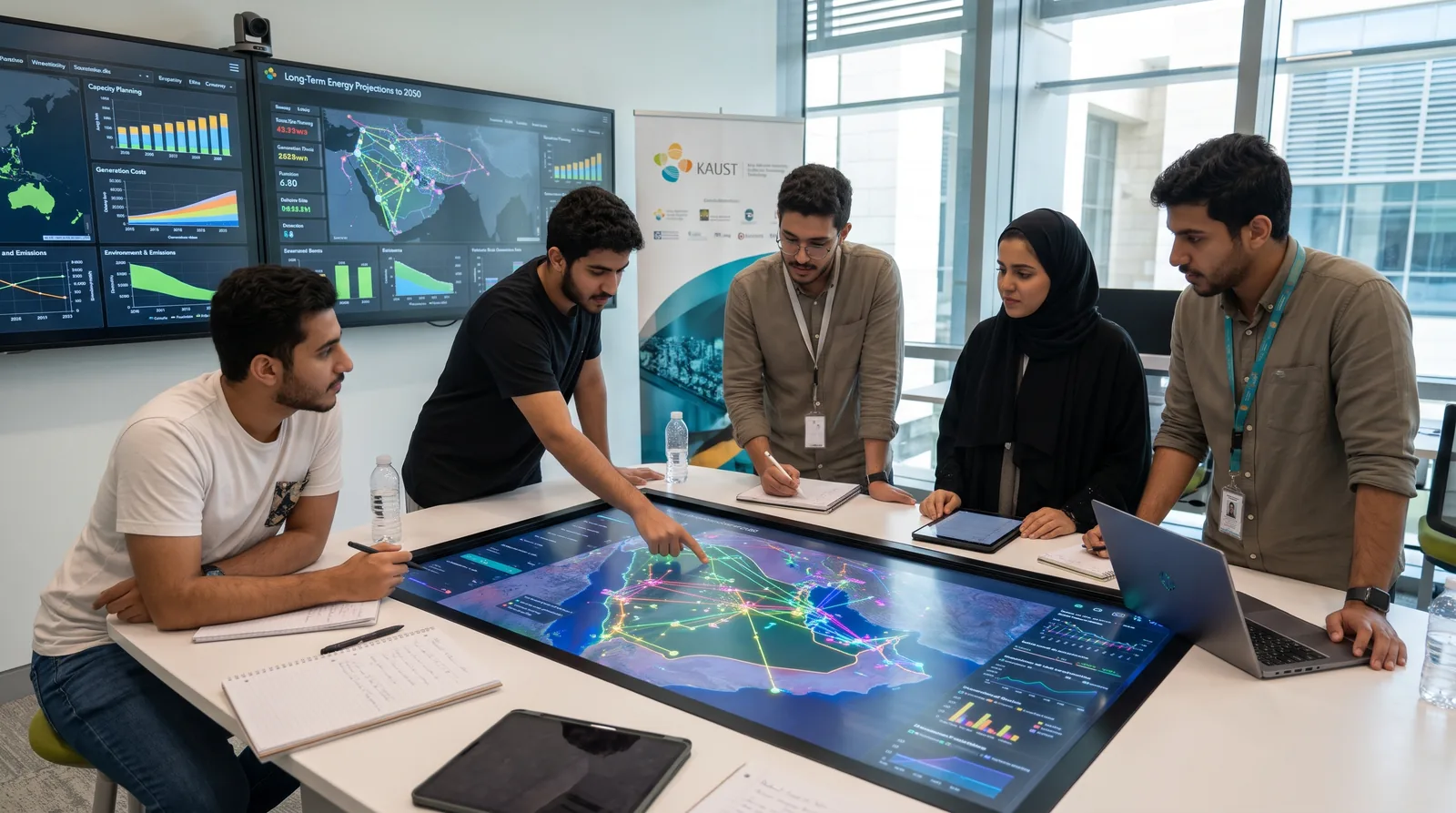
KAUST Academy launched a specialized summer program utilizing global energy software to train students in long-term power grid planning. This educational effort supports regional technological expansion by aligning technical expertise with future AI and infrastructure demands.
Reviewed by Matheus Grangeiro
Key numbers
2026year
Start date of the summer program in July 2026
2027year
Expected total solar eclipse in August 2027
6regions
Number of regions modeled in the Saudi electricity grid project
2050year
Long-term capacity expansion timeline for carbon pricing analysis
2034year
Hosting year of the FIFA World Cup examined by student projects
Training Local Experts for the Energy Demands of Artificial Intelligence
The rapid expansion of artificial intelligence infrastructure places compounding pressure on power grids worldwide, creating urgent demand for engineers proficient in long-term energy systems planning. This initiative addresses that gap directly: rather than relying on conventional academic instruction, participants engage with the same professional modeling tools used by utility regulators and infrastructure planners globally, acquiring applied competency in grid scenario analysis and capacity planning.
The program was organized in collaboration with Vista Equity Partners and Energy Exemplar, providing students access to industry-standard simulation software. This structure distinguishes the initiative from standard academic curricula by embedding corporate and sectoral partnerships into the learning framework. While aggregate participant figures remain unreported, the scope of student projects — spanning six grid regions and planning horizons through 2050 — reflects substantive technical depth. The initiative aligns with the broader objectives of Saudi Vision 2030, positioning local engineering talent to manage the energy demands of an increasingly AI-dependent economy.
Simulating Multi-Region Grids with Professional Software
Student participants employed PLEXOS software to construct long-term planning simulations of the kind routinely performed by utility regulators. In-person instruction commenced in July 2026 at King Abdullah University of Science and Technology (KAUST). One student group developed a six-region grid model to evaluate transmission bottlenecks, generation costs, emissions profiles, and optimal data center siting. These projects reflect active infrastructure planning challenges rather than hypothetical exercises, directly building technical capacity aligned with Saudi Arabia’s expanding artificial intelligence and data center sector.
Investigating Future Grid Strains and Policy Impacts
Project groups examined a range of forward-looking scenarios, including the grid implications of carbon pricing mechanisms through 2050 and power system stress associated with hosting the 2034 FIFA World Cup. Additional projects addressed system adequacy, energy storage valuation, data center placement, and load management during the total solar eclipse of August 2, 2027 — an event expected to bring up to six minutes of totality across western Saudi Arabia, representing the most significant eclipse visible from the Arabian Peninsula in over seven decades. Collectively, these scenarios equip engineers with analytical frameworks applicable to real regulatory and planning environments.
Based on reporting from KAUST. This is an independent explainer, written in our own words with AI assistance; KAUST has not reviewed or endorsed it. Read the original for the full details.