Shrinking Electronics to the Atomic Scale for Future Devices
Researchers published studies on atomic-scale electronic materials, tiny wireless switches, and simplified AI hardware, while also launching a startup. The evidence comes from peer-reviewed journal papers and a startup competition win.
Reviewed by Matheus Grangeiro
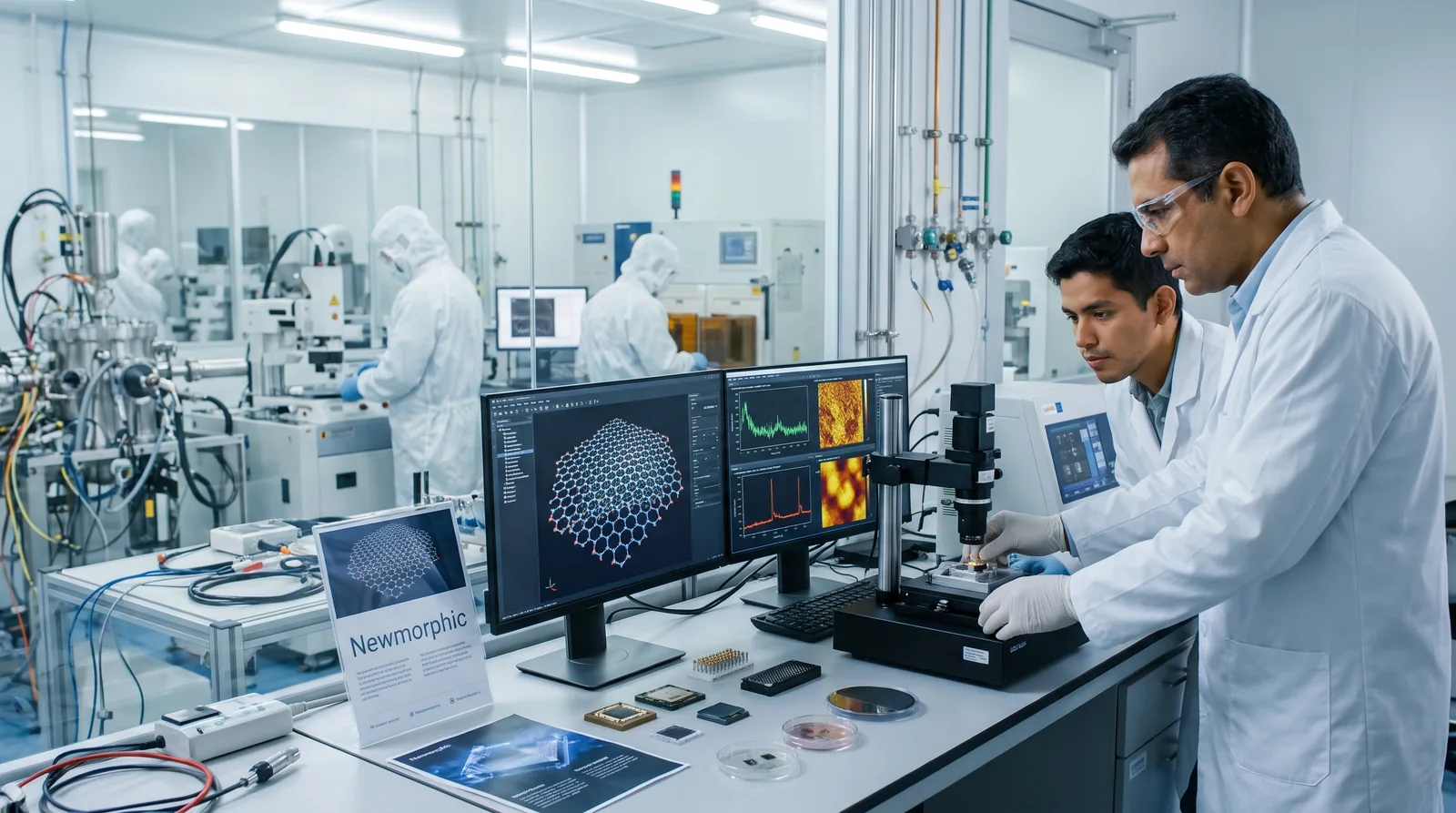
In short: Researchers published studies on atomic-scale electronic materials, tiny wireless switches, and simplified AI hardware, while also launching a startup. The evidence comes from peer-reviewed journal papers and a startup competition win.
As gadgets get smaller and stronger, engineers face massive hurdles at the level of single atoms.
What happened, in plain words
Professor Mario Lanza and his team at the National University of Singapore are exploring how materials behave at the atomic limit to build better electronics. In recent studies, the team investigated quantum tunneling in two-dimensional materials using a specialized microscope technique, built tiny wireless switches using insulating layered materials integrated onto commercial microchips, and demonstrated that a single silicon transistor can mimic brain-like neural and synaptic behaviors. Building on these discoveries, Professor Lanza and Dr Sebastian Pazos founded a startup called Newmorphic, which recently won a major deep-tech startup competition.
Key points
- Studying atom-thin materials: The team investigated two-dimensional materials that are only a single atomic layer thick to understand how electrons move through them.
- Quantum tunneling discovery: Using conductive atomic force microscopy, researchers found that tiny physical gaps between an atom-thin material and its electrodes can matter more than the material itself in blocking electrical current.
- Memristive wireless switches: Researchers developed very small switches using hexagonal boron nitride that retain their state after power is removed, which could help handle the demands of future wireless systems.
- Simplifying AI hardware: The team demonstrated that a single standard silicon transistor can emulate both neural and synaptic behaviors, reducing the parts normally required for artificial intelligence blocks.
- Startup success: Professor Lanza and Dr Pazos founded Newmorphic, which emerged as a winner in the Advanced Manufacturing and Industrial Systems domain at a major startup competition.
Terms explained
- Quantum tunneling — A phenomenon where electrons pass through barriers that are supposed to stop them. Example: Trying to keep water behind a tiny wall, but the water slips right through a hidden leak.
- Memristor — A type of resistor with memory that can be programmed at different values based on past electrical stresses. Example: A light switch that remembers how bright it was set last time, even if you unplug the lamp.
- Conductive atomic force microscopy — A specialized technique with high spatial resolution used to measure electrical properties at tiny scales. Example: Using an ultra-fine needle to check the electrical currents of microscopic surfaces.
Critical analysis
What is encouraging. The research spans fundamental physics all the way to practical device integration and commercial startup recognition, showing a broad and thorough approach to pushing electronics forward.
What deserves caution:
- Early stage laboratory research. Many of the highlighted findings come from peer-reviewed studies on novel materials and devices. Laboratory demonstrations do not automatically guarantee successful mass production or consumer readiness.
- Startup competition context. Winning a startup competition highlights commercial interest and potential. However, a competition win is not a peer-reviewed scientific validation of long-term market viability.
- Complex integration challenges. While the team integrated switches onto commercial microchips, scaling up these manufacturing processes for widespread industry use involves many additional engineering hurdles.
Bottom line: Atomic-scale engineering and new memory devices show strong potential for future electronics, though they remain early-stage innovations.
What we still don't know
The source does not provide a timeline for when these technologies will appear in commercial consumer devices, nor does it detail the full manufacturing costs or long-term durability under everyday wear and tear.
Based on reporting from National University of Singapore. This is an independent explainer, written in our own words with AI assistance; National University of Singapore has not reviewed or endorsed it. Read the original for the full details.