Brain Networks and Recovery in Consciousness Disorders
Researchers revealed a connection between clinical traits and brain network connectivity in patients with disorders of consciousness. The evidence comes from a single study analyzing patient data and brain scans.
Reviewed by Matheus Grangeiro
In short: Researchers revealed a connection between clinical traits and brain network connectivity in patients with disorders of consciousness. The evidence comes from a single study analyzing patient data and brain scans.
Figuring out who might recover from a serious loss of consciousness is one of medicine's toughest challenges.
What happened, in plain words
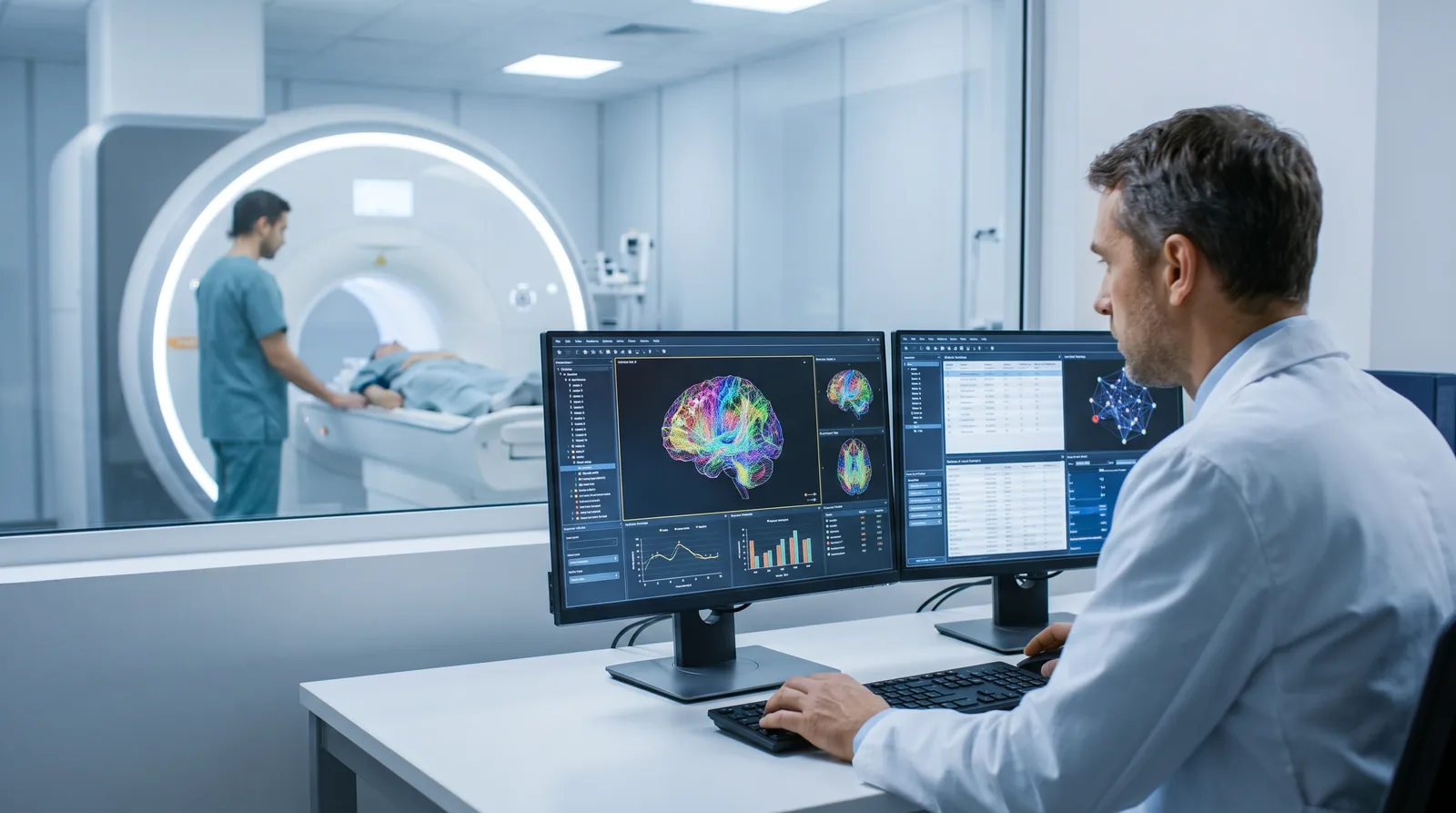
Scientists from the Institute of Biophysics of the Chinese Academy of Sciences, Beijing Tiantan Hospital, and Capital Medical University published a study on October 20 in The Innovation Life. They looked at 128 patients with disorders of consciousness and 40 healthy individuals. By combining clinical assessments with resting-state functional magnetic resonance imaging data, they examined how traits like age, injury cause, and time since injury relate to brain network connectivity across different cortical regions.
Key points
- Traumatic versus anoxic injuries: Patients with traumatic brain injury showed higher consciousness levels and better long-term functional recovery compared to those with anoxic brain injury.
- The role of age: Younger age was tied to higher consciousness levels and better recovery outcomes among the studied group.
- Brain network links: Different clinical traits matched up with distinct patterns of brain network connectivity, with the default mode network contributing heavily in machine learning models.
- Modular organization: Functionally recovered patients showed stronger positive intranetwork correlations and more pronounced negative internetwork correlations.
Terms explained
- disorders of consciousness — Medical conditions where a person's awareness of themselves and their environment is severely impaired. Example: A person in a coma or a minimally conscious state due to a severe head injury.
- functional magnetic resonance imaging — A specialized brain scanning method that measures brain activity by detecting changes associated with blood flow. Example: Taking pictures of a person's brain while they rest to see which areas show active blood flow patterns.
- default mode network — A specific network of interacting brain regions that activates when a person is not focused on the outside world. Example: Daydreaming or letting your mind wander while sitting quietly without any specific task.
Critical analysis
What is encouraging. The work combines detailed clinical assessments with brain imaging data from a substantial group of patients and healthy controls, using machine learning to look for patterns.
What deserves caution:
- Statistical correlations only. The mediation effects reflect statistical connections rather than proven cause-and-effect relationships. This means researchers cannot yet say that one factor directly causes the other to change.
- Single study design. The findings come from one published paper and require further verification. Additional testing through longitudinal studies and interventional trials is still necessary.
- Complex patient differences. Predicting recovery is exceptionally difficult due to vast differences in injury causes and background demographics. The source notes these many variables make clear predictions hard to establish.
Bottom line: A single study links certain clinical traits and brain network patterns to recovery potential, but these findings are observational and require further testing.
What we still don't know
The source does not establish causal relationships, and the reported mediation effects reflect statistical correlations. Further verification through longitudinal studies and interventional trials is needed, and the source does not cover every individual demographic variation.
Based on reporting from Chinese Academy of Sciences. This is an independent explainer, written in our own words with AI assistance; Chinese Academy of Sciences has not reviewed or endorsed it. Read the original for the full details.